
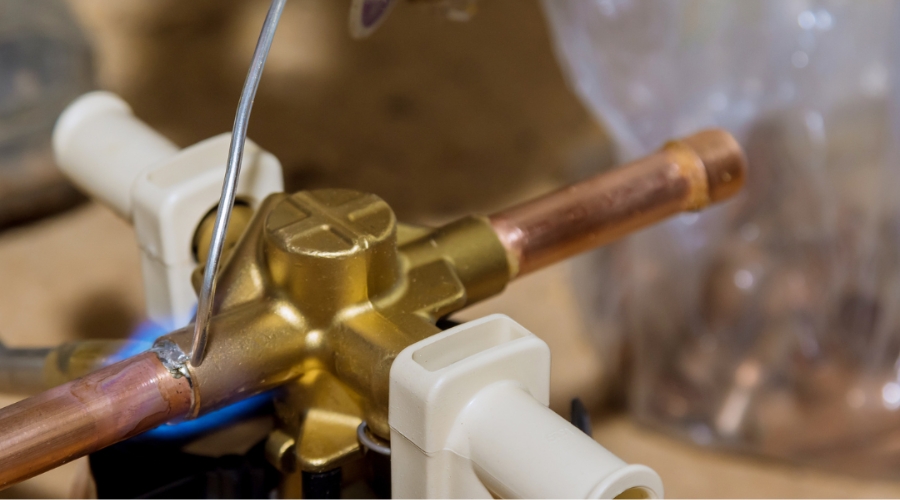
Are you looking to elevate your daily shower routine? One often overlooked but crucial aspect of a shower setup is the shower diverter. This small yet essential component determines how water flows through your shower fixtures, offering you control over whether the water comes out of the tub spout, showerhead, or both.
Let’s explore various types of shower diverters, their benefits, and common challenges associated with them.
Understanding Shower Diverters
 A shower diverter is a valve that directs water from the main water supply to the showerhead or tub spout. It allows you to switch between filling the bathtub and showering without having to adjust the water temperature each time.
Before we dive into the different types of shower diverters, let’s understand what they are and how they work.
- The Basics: Most shower diverters operate using a simple mechanism, typically controlled by a lever or knob. When you engage the diverter, it redirects water flow from the tub spout to the showerhead, or vice versa.
- What’s Inside? Inside the diverter valve, there are seals and gaskets that move to block off one water outlet while opening another. When the diverter is activated, these components shift to direct water accordingly.
- Take Your Pick: There are various types of diverters, ranging from manual to digital, each offering different levels of control and functionality.
Common Challenges with Shower Diverters
Shower diverters do not always flow smoothly. and can encounter issues that affect their performance. Some common challenges include:
 Leaking: A leaking diverter can lead to water wastage and potential damage to your bathroom. This can happen due to worn-out seals, loose connections, or corrosion.
- Stuck Diverter: Sometimes, the diverter can get stuck in one position, preventing you from switching between the tub spout and showerhead. This may happen due to mineral buildup, debris, or mechanical issues.
- Not Fully Diverting: In some cases, the diverter may not fully divert water to the desired outlet, causing water to flow from both the tub spout and showerhead at the same time.
- Temperature Fluctuations: Poorly functioning diverters can cause temperature fluctuations, leading to uncomfortable showers. This may occur due to issues with the mixing valve or pressure balancing mechanism.
So what makes one shower diverter different from the next. Let’s look at different types of shower diverters and some of the pros and cons for each:
Types of Shower Diverters
 Basic Shower Diverter Valve:
- Pro: Simple to use and install, typically found in standard shower setups.
- Con: Limited functionality, may not offer precise temperature control.
- Two-Valve Diverter:
- Pro: Separate controls for hot and cold water, allowing for independent temperature adjustment.
- Con: Requires more space and plumbing work compared to basic diverters.
- Three-Way Diverter Valve:
- Pro: Single handle for temperature and flow control, ideal for showers with handheld showerheads or multiple fixtures.
- Con: Can be more expensive and complex to install.
- Pressure-Balancing Valve:
- Pro: Maintains consistent water temperature despite fluctuations in hot or cold water supply.
- Con: May not provide precise temperature control, especially in extreme temperature changes.
- Thermostatic Mixing Valve:
- Pro: Allows precise temperature control and maintains a set temperature regardless of changes in water supply.
- Con: Higher cost, requires professional installation.
- Digital Shower Diverter:
- Pro: Advanced features like digital controls, preset options, and remote operation.
- Con: Higher initial cost, may require additional maintenance.
- Smart Shower Systems:
- Pro: Integrates with home automation for added convenience and customization.
- Con: High initial cost, reliance on technology which may require updates or troubleshooting.
Upgrading your shower diverter can significantly enhance your shower experience, providing greater control over water flow and temperature. Whether you opt for a basic manual diverter or a high-tech smart system, understanding the options available can help you make an informed decision.
Remember to consider factors such as budget, installation complexity, and desired features when choosing the right diverter for your bathroom. If you’re in need of assistance, it’s advisable to consult with a licensed plumber who can assess your situation and provide recommendations that align with your needs and budget.
The Great Plumbing Co.
For nearly three decades, The Great Plumbing Co. has been providing exceptional plumbing services for homeowners as well as business owners throughout Toronto and the GTA. Whether you’re dealing with a leaky hose bib, a clogged drain, or a toilet repair and service you can trust The Great Plumbing Co. to deliver timely solutions tailored to your specific requirements.
Contact us or book online to schedule your residential plumbing appointment.